

In brief: toe paronychia is a bacterial infection of the skin fold around the nail, most often affecting the big toe. The toe becomes red, warm, and swollen, with a throbbing pain. It is often mistaken for an ingrown toenail. It progresses quickly: avoid lancing it yourself and have it assessed early, especially if there is pus, fever, or diabetes.
A toe that becomes red, warm, swollen, with a throbbing pain that keeps you from sleeping, happens more often than you might think. Most people who experience this arrive at the clinic convinced they have an ingrown toenail. Sometimes they do. Other times, the real issue is elsewhere: an infection of the skin fold around the nail, called paronychia.

At first glance, the two can look similar, but they are not treated the same way. And that is exactly where many people lose time: they wait, assume it will go away, and try to deal with it themselves. Paronychia, however, progresses quickly. Understanding what it really is is the first step to addressing it at the right time.
Here is what paronychia really is, how to tell it apart from an ingrown toenail, and what you should absolutely not do yourself.
Written by Dr. Émile Carrier, podiatrist (OPQ 19019), Médecine podiatrique du Plateau, AGORA, Gatineau. Updated September 2026.
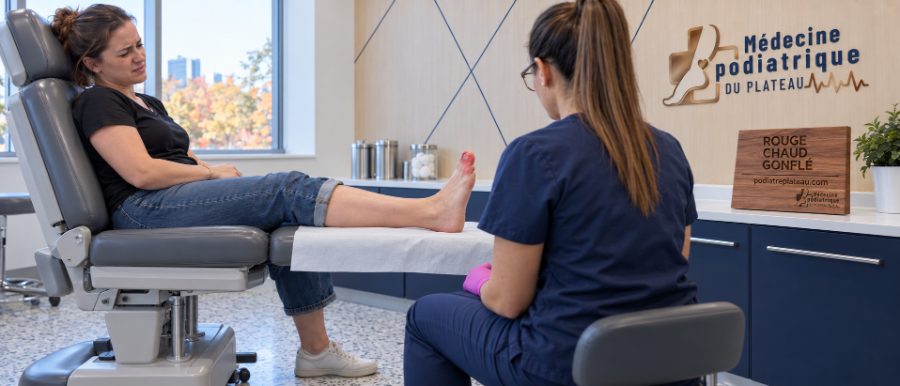
What are the symptoms of a big toe infection?
A red, warm toe: what should alert you. Toe paronychia is a bacterial infection affecting the tissues around the nail. It often develops over a few days, sometimes faster. At first, the skin around the nail becomes red and tender to the touch. The toe swells slightly. Local warmth appears. Then the pain changes in nature: it becomes throbbing, it beats with the heartbeat, and it wakes you at night. At this stage, pus may accumulate under the skin, right next to the nail. Most often, the big toe is affected because it is more exposed to friction and minor injuries. Often, the person does not even remember a specific triggering event, because a small unnoticed injury is enough.
What makes paronychia misleading is how quickly it progresses. A small redness that seems minor on Monday can become a clearly swollen toe by Thursday. That is why it is best not to wait for it to go away on its own.
Certain signs require prompt assessment:
- throbbing pain that prevents you from putting weight on the foot or sleeping;
- pus around the nail;
- redness spreading to the rest of the toe or the foot;
- fever;
- a warm, swollen toe in someone with diabetes or a weakened immune system.
This last point deserves special attention. In someone with diabetes, a toe infection should never be taken lightly because sensation and circulation are sometimes reduced. A small infection can progress without being truly felt. In that case, consult without delay. The same principle applies if you have circulation problems or an illness that slows healing.

What causes paronychia in the foot?
What happens around the nail. To understand paronychia, you need to look at how it starts. Almost always, there is first a small entry point in the skin: a cut, a crack, a splinter, a nail cut too short, or a nail corner that injured the skin fold. A bacterium takes advantage of this opening and settles in. The most common is Staphylococcus aureus (Merck Manual, acute paronychia).
From there, the body reacts. Inflammation is the body doing its cleanup: it sends immune cells, the area swells, turns red, and warms up. The problem is that the area around the nail is a small, enclosed space that does not stretch much. When pus forms there, pressure builds, and that pressure explains the throbbing pain. The tighter the space, the sharper the pain.
This reaction is helpful; it is how the body limits the infection. The issue is when the pus remains trapped: it cannot drain on its own and it continues to press on the tissues. That is why established paronychia often requires a procedure to relieve this pressure. It is straightforward when done in the right place, at the right time, and under clean conditions.
It is also important to name a distinction that is not always made. People often use “paronychia” for the acute infection—one that comes on quickly and is bacterial. There is also a slower, chronic form affecting the nail fold, linked to repeated exposure to moisture, in which yeasts such as Candida are often involved. The two do not unfold the same way and they are not treated the same. This is one of the reasons why making the right diagnosis matters so much.

Why is paronychia mistaken for an ingrown toenail?
Why paronychia is often mistaken for something else. This is probably the most important point about paronychia. Three common mix-ups come up often.
The first is the ingrown toenail. In that case, the problem is mechanical: a nail corner grows into the skin fold. Paronychia, on the other hand, is an infection. The distinction matters because an ingrown toenail can in fact cause paronychia: the nail corner injures the skin, bacteria enter, and the infection sets in. So it is not always one or the other. Sometimes, both need to be addressed.
The second is a black toenail, a subungual hematoma. That one comes from an impact or repeated pressure in the shoe. It is pooled blood, not an infection.
The third is nail fungus, a fungal infection of the nail that slowly thickens and discolours it, without the sharp, throbbing pain of paronychia. This infection is much slower than paronychia.
| What we observe | Toe paronychia | Ingrown toenail | Black toenail | Nail fungus |
|---|---|---|---|---|
| Nature | Bacterial infection of the skin fold | Mechanical issue: a nail corner grows into the skin | Blood pooled under the nail | Fungal infection of the nail |
| Speed | Progresses quickly, over a few days | Variable, often recurring | After an impact or repeated pressure | Slow |
| How it feels | Redness, warmth, swelling, throbbing pain, sometimes pus | Pain along the side of the nail | Dark nail | Thickened, discoloured nail, without sharp pain |
| The trap | Lancing it yourself | It can cause paronychia | Mistaking it for an infection | Confusing it with a fast infection |
Recognizing which of these situations is involved is not a minor detail. And that is where the riskiest reflex appears: trying to fix it yourself. Lancing the abscess with a needle, forcing the nail corner, scraping the area. The intention is understandable—you want to relieve the pressure. But these actions open the door to other bacteria and can drive the infection deeper. The worst time to improvise is when there is already pus.
When in doubt, the rule is simple: if it swells, feels hot, and throbs, it is probably infectious and deserves a professional assessment.

What is the treatment for paronychia in a toe?
How we assess and treat paronychia at the clinic. At Médecine podiatrique du Plateau, the process always begins with a thorough history. Since when? How did it start? Was there a splinter, a cut, a recent pedicure? Do you have diabetes? Are you taking medications that weaken the immune system? These answers already provide strong guidance. They also help determine the level of urgency.
Next comes the examination. We look at the toe, assess the extent of redness, the presence of pus, and the condition of the nail. If needed, an X-ray or an ultrasound helps verify two things: that there is no foreign body left under the skin and that the infection has not reached the bone. A good exam avoids a lot of trial and error.
At the clinic, management of toe paronychia follows these steps:
- the history: how long it has been present, how it started, diabetes or medications that weaken immunity;
- toe examination: extent of redness, presence of pus, condition of the nail;
- if needed, on-site X-ray or ultrasound;
- a plan based on the stage: local care when caught early, in-clinic drainage when an abscess has formed;
- treating the cause, for example a recurring ingrown toenail, then follow-up as needed.
The plan then depends on the stage. When the infection is caught early, local care is often sufficient: antiseptic soaks, cleaning, a protective dressing, and sometimes careful removal of what caused the injury, such as a splinter or a problematic nail corner. When an abscess has formed, it must be drained. This drainage is done at the clinic, under clean conditions, with local anesthesia at the base of the toe so the procedure is generally well tolerated.
If an ingrown toenail is the source of the problem and keeps coming back, we may consider partial nail removal to prevent recurrence. We do not treat only today’s symptom; we treat what caused it. When the infection extends beyond the nail fold, medication may become necessary, and management is adjusted accordingly.
The duration of the plan varies depending on the stage at the time of consultation. When caught early, paronychia often resolves in a few days. If allowed to progress, it requires longer management.
Dr. Sandra Gendron, Dr. Stephen Davis, and Dr. Émile Carrier, podiatrists, assess this type of situation regularly. Follow-up is arranged as needed to ensure the area heals properly.

When should you consult for toe paronychia?
See a podiatrist without waiting too long. Early paronychia is managed well when addressed promptly. The main message is simple: it is not a problem worth waiting on, especially if there is pus, throbbing pain, spreading redness, or fever. And for someone with diabetes, any toe infection warrants prompt assessment.
We can often see you quickly for this type of situation. The goal is not to dramatize, but to look at what is happening, make the right diagnosis, and establish a plan tailored to your toe, its cause, and your overall health. A podiatrist is a regulated health professional authorized to diagnose and treat foot conditions (Ordre des podiatres du Québec).
You do not need to make the diagnosis yourself before calling. Describing what you see over the phone is enough for us to assess whether you need to be seen quickly.
Frequently asked questions about toe paronychia
How do I know if I have paronychia or an ingrown toenail?
An ingrown toenail is mechanical: a nail corner grows into the skin. Paronychia is an infection, with redness, warmth, throbbing pain, and sometimes pus. An ingrown toenail can also cause paronychia. An examination can determine which it is.
Can toe paronychia heal on its own?
Early paronychia can sometimes settle with antiseptic soaks, but it progresses quickly. As soon as there is pus, throbbing pain, or fever, an assessment is recommended. If you have diabetes, consult without delay.
What should I do while waiting to see a podiatrist for paronychia?
You can soak the toe in warm salt water, keep the area clean and covered, and avoid tight shoes. What to avoid: lancing the abscess yourself or forcing the nail, which often worsens the infection.
When does toe paronychia become urgent?
When redness spreads, pain becomes severe and throbbing, there is fever, or in someone with diabetes or reduced or weakened immunity. These signs warrant prompt assessment to prevent the infection from progressing.
To Learn More
- Ingrown toenail: minor issue or podiatric emergency?
- Ingrown toenail treatment in Gatineau
- Foot care and medical pedicure
Make an appointment: podiatreplateau.com/nous-joindre/
819 800-1212 | AGORA, Gatineau
Results vary according to the condition of each person.

About the author: Dr. Émile Carrier, podiatrist
Member of the Ordre des podiatres du Québec (OPQ 19019), graduate of UQTR. He practices at Médecine podiatrique du Plateau, at AGORA in Gatineau.
Published September 29, 2026. Updated September 2026.
