
An ingrown toenail is a condition that occurs when part of a nail injures the surrounding skin. This problem particularly affects the big toe.


An ingrown toenail is a condition that occurs when part of a nail injures the surrounding skin. This problem particularly affects the big toe.
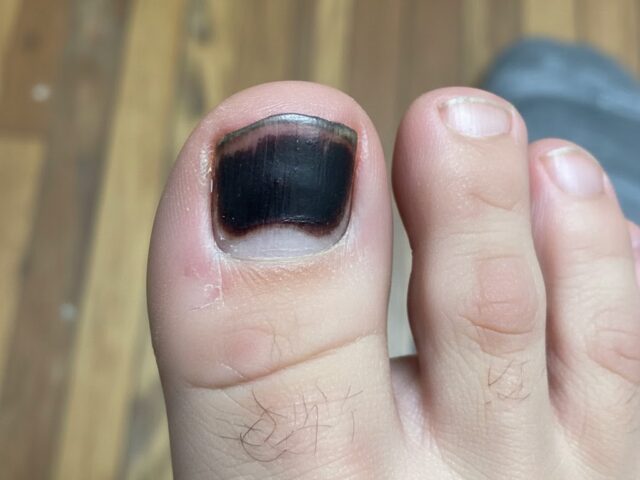
Have you dropped a heavy object on your toe or your nail has been directly impacted during a sports activity and you end up with a black toenail? The pain is immediate and intense. In some cases, the black toenail on the foot occurs after a painless but repetitive microtrauma, for example during running and physical activity with multiple changes of direction such as tennis or pickelball. The toe can hit the toe of the shoe if it is too small or too big.
The following hours reveal the extent of the trauma. A subungual hematoma forms, creating a blue-black spot under the nail. Accumulated blood pressure intensifies the pain. The nail can partially detach from its bed. In some cases, it fractures or tears.
The black toenail is usually the result of a direct impact or repeated pressure on the nail system. This injury can affect the nail itself, the underlying nail bed, or the matrix that produces the nail. The characteristic black or blue-black coloration comes from the blood that accumulates under the nail following the trauma.
The severity varies from a simple subungual hematoma to a complete avulsion of the nail with damage to the surrounding structures.
Nail injuries frequently occur during domestic accidents (heavy object falling on the foot, getting stuck in a door), sports activities (contact sports, running with unsuitable shoes) or repeated traumas (shoes that are too tight, professional activities).
Pain is the dominant symptom, especially when a subungual hematoma creates pressure. You will notice a change in colour under the nail, ranging from red to blue-black depending on the age of the hematoma. The nail can partially or completely detach from its bed. In severe cases, fractures of the distal phalanx (tip of the toe) may accompany the nail injury.
Swelling and tenderness to touch usually persist for several days. If the impact has damaged the nail matrix, the nail that will grow back could have permanent deformations.
At Médecine podiatrique du Plateau, podiatrists Dr. Sandra Gendron, Dr. Stephen Davis and Dr. Émile Carrier carefully assess your nail trauma. The clinical examination determines the extent of the damage. X-rays may be needed to rule out an associated bone fracture.
For painful subungual hematomas, we often perform trepanation. This simple procedure creates a small hole in the nail to drain the accumulated blood. The relief is usually immediate and dramatic.
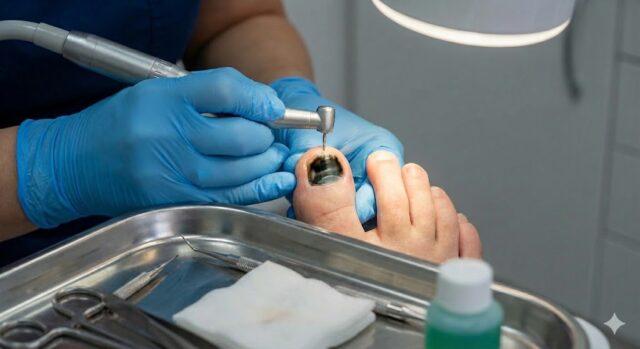
If the nail is partially detached but still attached, we assess whether it can be temporarily preserved as a natural protection of the sensitive nail bed. Completely detached nails are gently removed. If part of the nail is still attached, it may be recommended to remove it to avoid further injury, such as could occur when putting on socks or doing physical activity. In this case, we will recommend a local anesthesia of the toe before proceeding. We then clean and protect the exposed nail bed with an appropriate dressing.
Nail bed lesions sometimes require repair to optimize regrowth. The wounds are cleaned meticulously. Sutures may be required for significant tears.
We also guide you on home care, including protecting the toe during healing, monitoring for signs of infection, pain management and anticipating nail regrowth which typically takes 6 to 12 months for a toe.
Consult a doctor promptly after nail trauma if the pain is severe (especially with a large subungual hematoma), if the nail is partially or completely detached, if you notice a deformity of the toe suggesting a fracture, or if signs of infection appear (spreading redness, warmth, purulent drainage).
Early professional evaluation optimizes healing and minimizes the risk of complications such as infection or permanent nail deformities.
For a quick treatment of your nail trauma, contact us at 819 800-1212 or write to us to schedule your visit.
Podiatric consultations are NOT covered by the RAMQ. Private insurance usually covers our services.
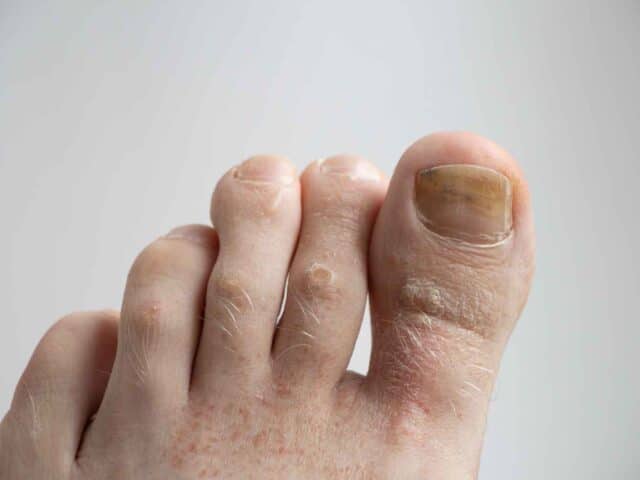
Listen to this video clip from Dr. Émile Carrier, podiatrist, about the 5 common mistakes in the management of nail fungus (onychomyosis) – in French (English subtitles available). It gives you precise and easily applicable advice to maximize your chances of eradicating the problem effectively.

Nail fungus, also known as onychomycosis, is a common fungal infection that affects the nails of the hands or, more commonly, the toenails. Although often considered benign, this problem can lead to complications if not treated promptly. In this article, we will explore the main causes, the importance of treatment, the diagnostic options available at Médecine podiatrique du Plateau, and the specialized care we offer. You will know everything to better understand and act against nail fungus.
Onychomycosis is caused mainly by dermatophytic fungi, but can also result from other pathogens such as yeast or mold. Here are some factors that promote its appearance:
In short, we often get nail fungus for no easily apparent reason.
Many people overlook nail fungus, thinking that it is a purely cosmetic problem. However, its consequences can go far beyond that:
Treating nail fungus in its early stages helps avoid these complications while reducing the risk of recurrence.
At Médecine podiatrique du Plateau, we offer advanced diagnostic services to identify onychomycosis and tailor care to your needs. Steps include:
With an accurate diagnosis, we can offer a suitable care plan, increasing your chances of a quick recovery.
Your health is our priority and our podiatrists provide you with state-of-the-art treatments to get rid of nail fungus. Looking for the miracle trick? In fact, there is not just one cure, but a set of treatments that are part of a complete treatment program that we offer to our patients to solve their nail fungus problem, namely:
Depending on the severity and nature of the infection:
We use specialized techniques to clean and debride infected nails. This procedure reduces the thickness of the nail and removes infected parts, making it easier for antifungals to penetrate. We use quality milling equipment with autoclavable handpieces as well as perfectly sterilized instruments at our sterilization plant in our clinic.
Treating onychomycosis is not instantaneous. Our podiatrists will accompany you throughout your therapy with regular follow-up consultations until the infection is completely resolved. This follow-up includes advice to avoid recurrences:
Nail fungus may seem harmless, but quick and effective treatment is essential to avoid unnecessary complications and discomfort. At Médecine podiatrique du Plateau, our knowledge, know-how and personalized care offer you optimal treatment. Contact us today to schedule a consultation and get your nails healthy.
Make an appointment now and take the first step towards a sustainable solution!

We bring our energy, experience and knowledge to guide our clients towards the solution to their challenges and a more enjoyable life.