

Have you been suffering from plantar fasciitis for more than six months? Is your Achilles tendonitis refusing to heal despite conservative treatments? Chronic foot pain can turn every step into an ordeal and severely limit your daily activities. At Médecine podiatrique du Plateau, located in the AGORA complex in Gatineau, we now offer radial shockwave treatment, an innovative approach to regenerative medicine that helps restart the natural healing process in chronically injured tissues.
What is Shockwave Treatment in Gatineau?
Radial shockwave therapy, commonly known as “shockwave therapy”, represents a significant advance in the management of chronic musculoskeletal pain. This technology uses high-energy acoustic waves to stimulate the natural mechanisms of tissue repair. Unlike conventional approaches that focus on reducing symptoms, this treatment aims to reactivate the healing process itself.
When pain becomes chronic, the body may “abandon” the injured area. The inflammatory processes necessary for tissue repair stop, leaving damaged tissue in a state of stagnation. The shock waves literally wake up these sleeping tissues by creating a controlled micro-traumatization. This mechanical stimulation causes intra-tissue microbubbles to burst, a phenomenon called cavitation, which triggers a cascade of beneficial biological reactions.
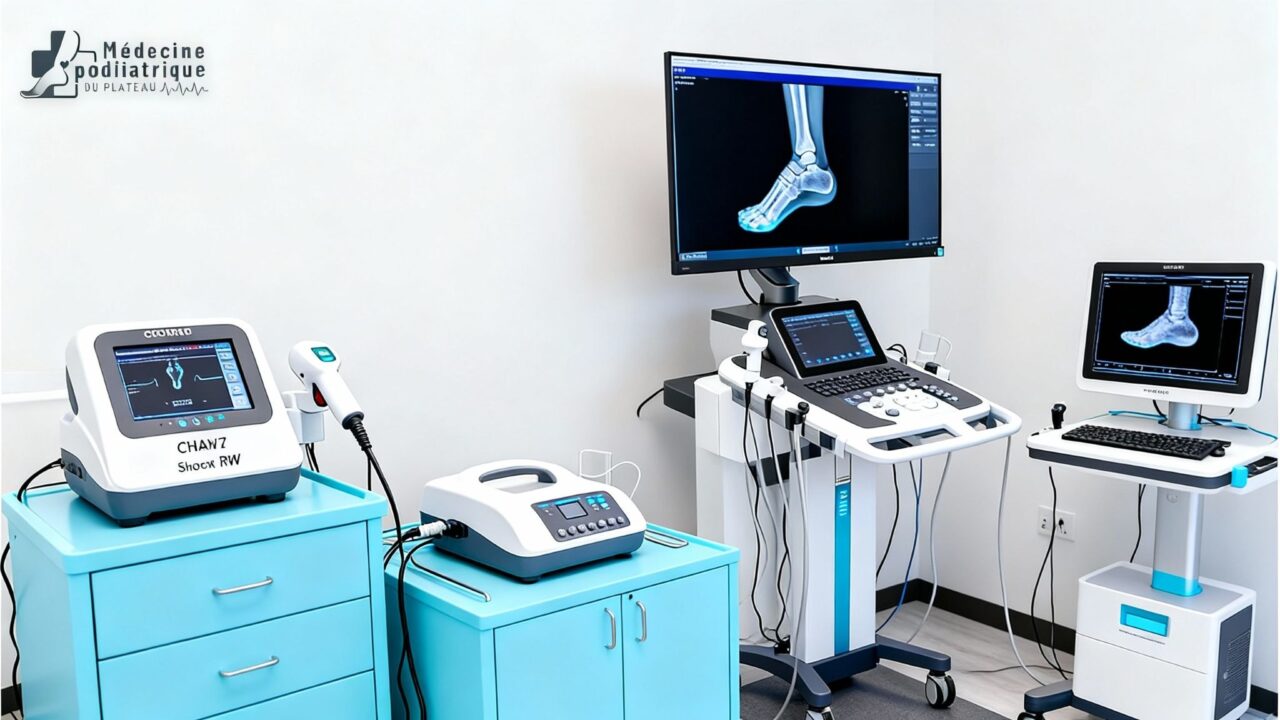
The increase in local blood flow, the calling in of restorative cells and the production of growth factors allow the tissues to start their natural healing process again. At Médecine podiatrique du Plateau, we use a state-of-the-art device known for its precision and clinical efficiency.
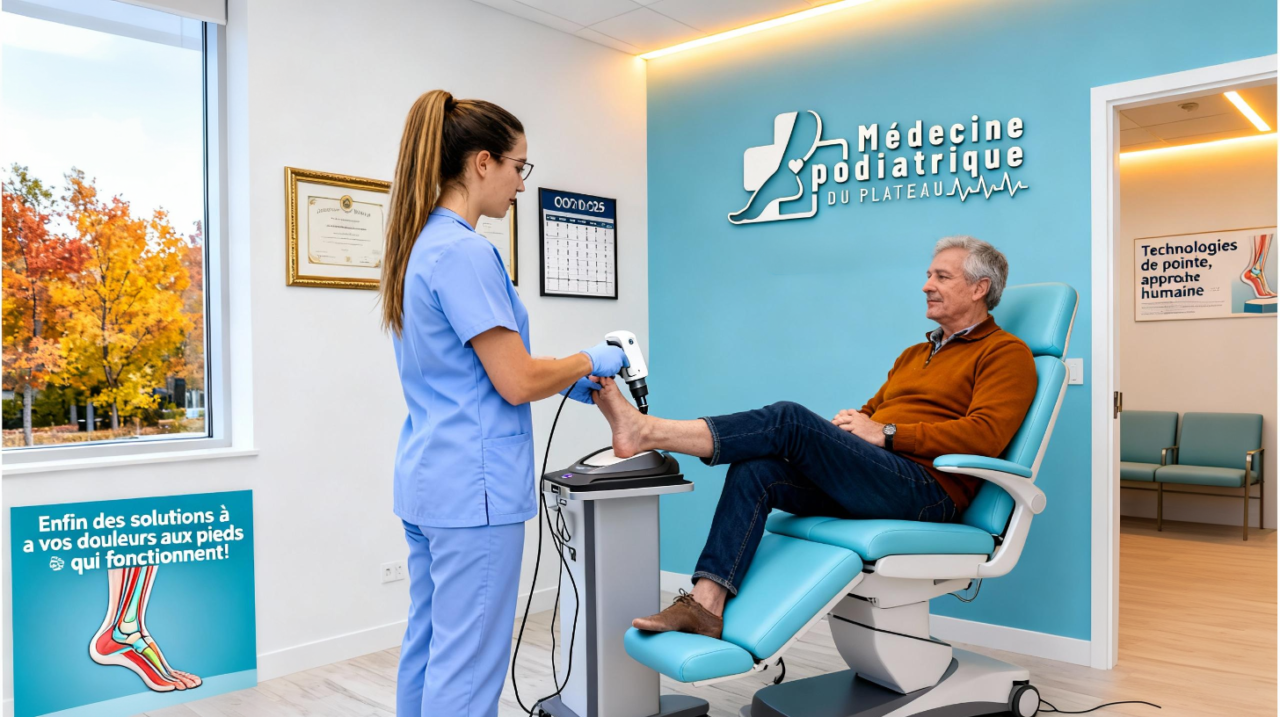
Shockwave-treated foot pain
Radial shockwave therapy is particularly effective for several chronic podiatric pathologies that are resistant to usual conservative treatments.
Chronic plantar fasciitis
Plantar fasciitis is the most common cause of heel pain in podiatry. When this condition persists beyond a few months despite foot orthotics, stretching, and rest, shockwaves offer a promising non-surgical treatment option. The treatment directly targets the inflamed plantar fascia to stimulate its regeneration. Clinical studies show a success rate of 70% to 85% in chronic cases that had not responded to other modes of treatment.
Achilles tendinopathy
The Achilles tendon, subjected to intense mechanical stress during walking and running, can develop chronic degenerative lesions. These tendinopathies, which are often very painful and limiting, generally respond well to shockwave therapy. The treatment promotes the reconstruction of tendon collagen and accelerates the resumption of sports activities.
Heel spur
The heel spur, or heel spur, corresponds to a bony growth in the heel. Although often asymptomatic, it can cause significant pain when accompanied by local inflammation. Shock waves act on microcalcifications while stimulating the regeneration of surrounding soft tissues.
Posterior tibial tendon dysfunction
This disease, which is responsible for the progressive collapse of the arch of the foot, also benefits from this regenerative approach. The treatment helps to reduce tendon inflammation and improve the biomechanical function of the foot.
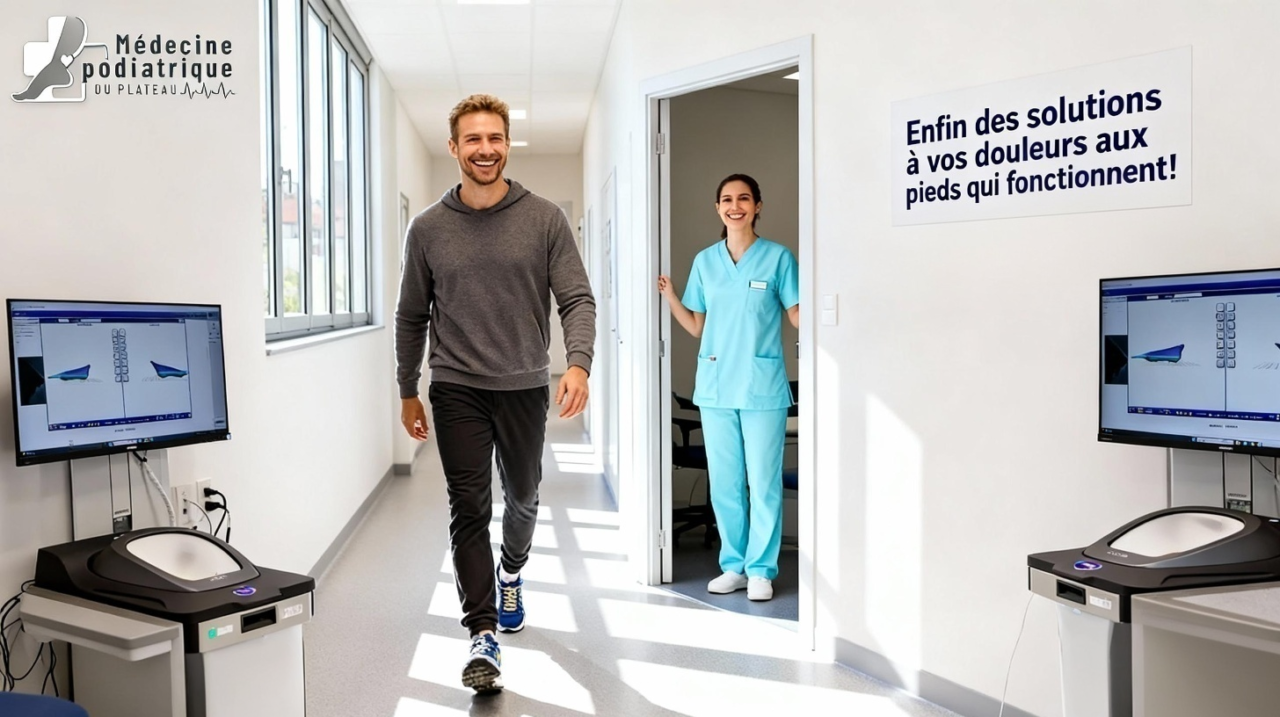
The Treatment Process: What to Expect
At Médecine podiatrique du Plateau, shockwave treatment is part of a global and personalized approach. Here’s how the entire process goes.
In-depth initial assessment
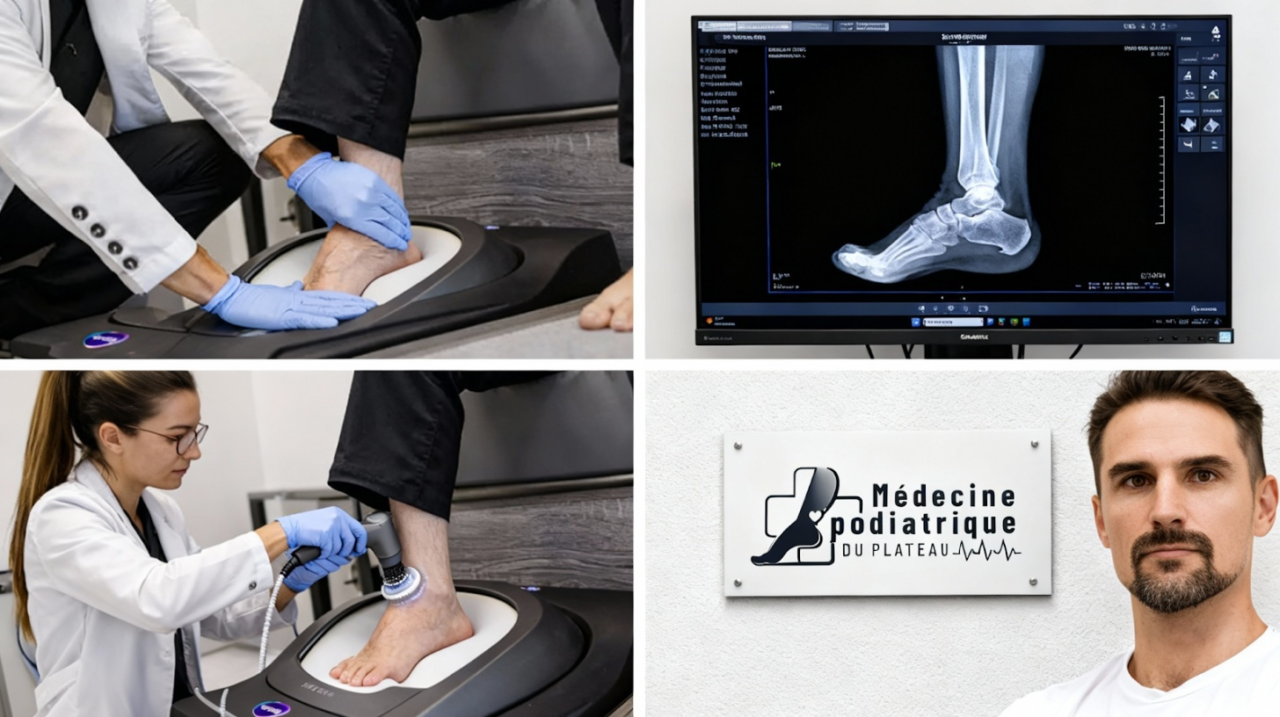
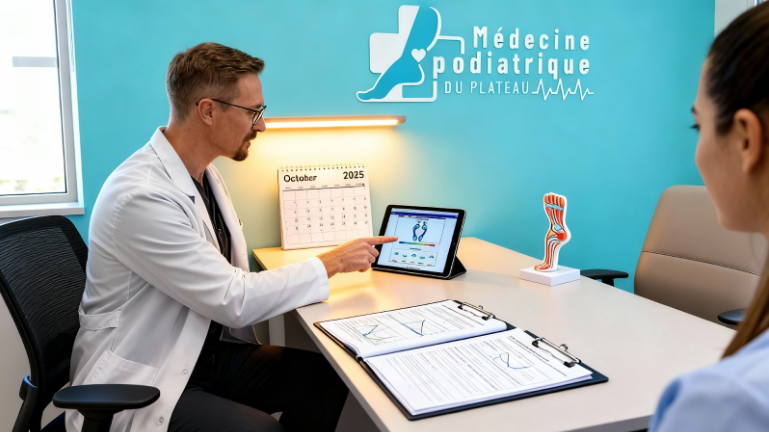
Before starting any treatment, our podiatrists Sandra Gendron, Émile Carrier and Stephen Davis perform a detailed clinical evaluation. This consultation includes a biomechanical examination, an analysis of your medical history and an evaluation of your symptoms. Additional examinations such as targeted musculoskeletal ultrasound or digital X-rays (available on site) can be performed to precisely locate the damaged tissue and confirm the diagnosis.
Personalized treatment protocol
Shockwave therapy usually requires between three and five sessions, spaced one to two weeks apart depending on your situation. Each session lasts approximately 5 to 15 minutes. Your podiatrist applies a conductive gel to the area to be treated, then uses the applicator to deliver the acoustic waves directly into the target tissues. The frequency and intensity are adjusted according to your tolerance and the nature of your pathology.
Treatment Experience
The sensation during treatment varies from person to person. Most patients describe moderate tenderness rather than actual pain. This sensation is proportional to the intensity of the underlying inflammation. For people with severe acute pain, we can adjust the settings to optimize your comfort. The treatment is generally well tolerated and does not require any anesthesia.
Recovery period and results
Unlike surgery, this treatment does not require any downtime. You can resume your daily activities immediately after each session. However, the results are not immediate. The therapeutic effect manifests itself gradually over several weeks following the treatment, while the tissue regeneration processes are accomplished. A gradual improvement in comfort is usually reported over the weeks. Results vary according to the condition of each person.
Contraindications and precautions
Although shockwave therapy is safe and effective for the majority of patients, there are some situations that require special precautions.
Treatment may not be recommended in the following situations: presence of a pacemaker or other implanted electronic device, blood clotting disorders or taking anticoagulants, pregnancy, active infection in the area to be treated, malignancy proximal to the treatment area, orthopedic equipment (plates, screws) in the targeted area.
For people with very severe acute pain (7-10 on the pain scale), we usually recommend controlling the inflammation first before starting this treatment. Similarly, the concomitant intake of anti-inflammatories can be counterproductive to the therapeutic mechanism of shock waves, which is based on the reactivation of a controlled inflammatory response.
During your consultation at Médecine podiatrique du Plateau, your podiatrist carefully assesses your eligibility for treatment and discusses alternatives with you if necessary.
Why choose Médecine podiatrique du Plateau?
Our clinic located in the AGORA complex in Gatineau offers several distinctive advantages for your radial shock wave treatment.
State-of-the-art equipment
We use a device manufactured by a company recognized worldwide for its reliability and clinical effectiveness. This modern equipment allows precise control of the treatment parameters to optimize your results.
Integrated approach
Shockwave treatment is part of a global therapeutic strategy. We often combine this technology with other modalities such as our custom foot orthotics (made from precise digital impressions), the Health Canada approved Class IV therapeutic laser, or personalized exercise programs. This multimodal approach maximizes your chances of full recovery.
In-depth diagnosis
Before any treatment, we perform a complete diagnostic evaluation. Our on-site equipment includes targeted musculoskeletal ultrasound and digital radiography, allowing us to accurately visualize the affected structures and tailor treatment to your specific situation.
Podiatric know-how
Our team of three experienced podiatrists – Dr. Émile Carrier, Dr. Sandra Gendron and Dr. Stephen Davis, podiatrists – have extensive training in podiatric medicine and advanced treatment technologies. This expertise ensures optimal use of shockwave therapy.
Accessibility and comfort
Located in the heart of the AGORA complex in Gatineau, our clinic offers easy access with free outdoor parking for 3 hours. We serve patients in Gatineau, Hull, Aylmer and Ottawa who are looking for state-of-the-art podiatric solutions in a modern and welcoming environment.
Maximizing Your Results: Additional Recommendations
To optimize the effectiveness of your shockwave treatment, several complementary measures can be put in place.
Personalized exercise program
As part of your treatment protocol, your podiatrist will recommend specific exercises to perform at home. These stretching and strengthening exercises are essential to consolidate the gains made and prevent recurrences. The regularity in the execution of these exercises directly influences the duration and quality of your recovery.
Biomechanical modifications
If poor foot biomechanics are contributing to your problem, we can recommend custom-made foot orthotics. These devices correct structural imbalances that overload your tissues and promote optimal distribution of plantar pressure.
Lifestyle adjustments
During the healing process, there are some temporary changes that can be beneficial: adapting your sports activities, choosing appropriate shoes with adequate support, maintaining a healthy weight to reduce stress on your feet. Your podiatrist will discuss with you the appropriate adjustments to your situation.
Frequently asked questions about shockwave therapy
Is shockwave therapy painful?
Most patients describe moderate tenderness rather than actual pain. The sensation varies depending on the intensity of the underlying inflammation and your personal tolerance. Generally well tolerated, the treatment takes place without anesthesia.
How many sessions will be necessary for my condition?
The standard protocol includes between 3 and 5 sessions spaced one to two weeks apart. The exact number depends on the nature of your condition, how long it has been in use, and how you respond to treatment. Your podiatrist will establish a personalized plan during the initial assessment.
When will I see results?
The improvement is not immediate. The therapeutic effects manifest themselves gradually over several weeks following the treatment, while the tissue regeneration processes are accomplished. Most patients report a gradual improvement in comfort over the weeks. Results vary according to the condition of each person.
Can I combine this treatment with my foot orthotics?
Absolutely. Shockwave treatment combines excellently with the wearing of custom-made foot orthotics. This integrated approach treats both acute symptoms (shock waves) and underlying biomechanical causes (orthotics).
Is this treatment covered by insurance?
Podiatric care is not covered by the RAMQ in Quebec. However, most private insurance companies offer coverage for podiatric services, which may include shockwave treatments. We provide all the necessary documentation for your insurance claims. Under certain conditions, the CNESST, the SAAQ and Veterans Affairs (Blue Cross) may cover these services if prior authorizations are obtained.
Are there any side effects?
Side effects are usually minimal and temporary. Some patients may experience mild tenderness or local redness in the hours following treatment. These reactions usually resolve within 24 to 48 hours.
What if the treatment doesn’t work for me?
If shockwave therapy does not produce the desired results, other treatment options remain available. During your evaluation, your podiatrist will discuss a complete treatment plan with you that includes several alternatives depending on your specific situation.
Take control of your chronic pain
Chronic foot pain doesn’t have to be a fatality. Radial shock wave treatment represents a significant advance in the non-invasive management of resistant podiatric diseases. This regenerative medicine technology helps to kick-start natural healing processes in chronically injured tissues.
At Médecine podiatrique du Plateau, we combine this innovative technology with a personalized approach and in-depth diagnostics to maximize your chances of recovery. Our team of experienced podiatrists will support you at every step of your therapeutic journey.
If you suffer from plantar fasciitis, Achilles tendinopathy, or other chronic foot pain that persists despite conservative treatments, shockwave therapy may be the solution you’re looking for. A comprehensive assessment will determine if this approach is right for you.
Contact us today at 819 800-1212 or request an appointment by filling out the contact form.
Our clinic is located in the AGORA complex in Gatineau.
20 Allée de Hambourg, Entrance A, 2nd floor
Our team welcomes you in a modern environment with free parking (3 hours).
Results vary according to the condition of each person. A care plan is drawn up after evaluation.
