

You feel a deep pain in the center of your heel when you walk. This sensation differs from the morning pain typical of plantar fasciitis. It intensifies on hard surfaces. Every step on concrete or tiles makes you wince.
You try to walk on tiptoe to spare your heel. This compensation now creates tension in your calves. The pain persists despite the rest and stretching that usually relieves your foot problems.
You may suffer from heel fat pad syndrome, a condition often confused with other causes of heel pain. However, you must know that this is an uncommon problem even though some healthcare professionals describe a variety of heel diseases with this term.
What is fat pad syndrome?
The heel fat pad, also known as the plantar fat pad, is a specialized structure located under the heel bone, the calcaneus. This layer of adipose tissue organized into fibrous compartments acts as a natural shock absorber. It absorbs impact forces that can reach two to three times your body weight when walking.
Fat pad syndrome occurs when this protective structure deteriorates or shifts. Adipose tissue thins, loses elasticity or migrates laterally. This degradation exposes the heel bone to repeated shocks without adequate protection. The result: a deep and diffuse pain in the heel.
This pathology particularly affects people over 40 years of age, as the pad thins with age. Athletes in high-impact sports (running, basketball, tennis) are also at increased risk. Prolonged use of high-heeled shoes or shoes that minimize cushioning can accelerate pad degradation.
Distinctive symptoms
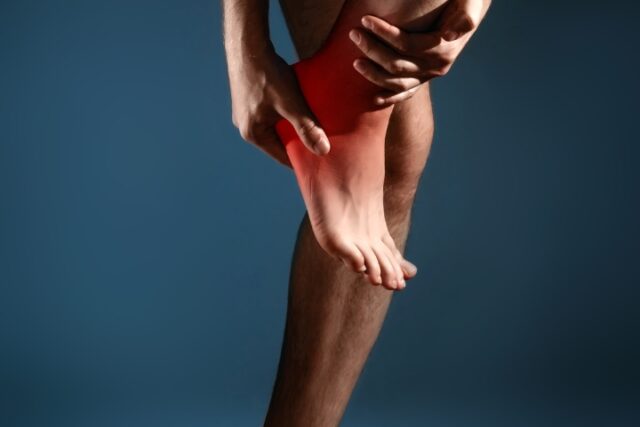
The pain is located in the center of the heel, directly under the heel bone. Unlike plantar fasciitis, which causes sharp pain on the inner edge of the heel, fat pad syndrome creates a sensation of deep bruising or bone bruising.
Discomfort worsens on hard surfaces. Walking barefoot on the floor becomes particularly painful. Prolonged standing intensifies the pain. The direct impact of the heel on the ground — going down a flight of stairs, jumping — triggers sharp pain.
The pain usually decreases with rest and gradually worsens over the course of the day as you accumulate the impacts. This is in contrast to plantar fasciitis, which is typically more painful in the first morning steps.
On palpation, your heel has a marked sensitivity in the center. The fabric may feel thinner or less resilient than a healthy heel.
Diagnosis at our clinic
At Médecine podiatrique du Plateau, Dr. Sandra Gendron, Dr. Stephen Davis and Dr. Émile Carrier, podiatrists, differentiate fat pad syndrome from other causes of heel pain that are much more common.
Clinical examination reveals a specific sensitivity in the center of the heel during direct palpation. We assess the thickness and resilience of the pad by compressing the fabric between our fingers.
X-rays exclude other pathologies such as stress fractures of the calcaneus or heel spurs. Although these bone spurs often accompany plantar fasciitis, their presence does not usually cause the pain of fat pad syndrome.
Musculoskeletal ultrasound visualizes the fat pad, but also the structures in the surrounding area like the plantar fascia attachment on the heel bone. This technology allows your podiatrist to measure its thickness, evaluate its homogeneity and detect associated inflammation or edema. Ultrasound also differentiates this syndrome from plantar fasciitis by examining the adjacent plantar fascia.

Treatment Options
Our therapeutic approach aims to protect the heel and optimize the function of the residual pad.
Silicone or gel heel pads redistribute pressure. These insoles cushion impacts and relieve the weakened heel. Different densities and thicknesses adapt to the severity of your problem.
Custom foot orthotics with heel reinforcement provide superior support. We design these devices to maximize damping while maintaining biomechanical stability.
Choosing the right footwear is crucial. Shoes with slightly raised heel (reducing direct impact). Thick, cushioned midsoles. Avoidance of flat or minimalist shoes.
Activity modifications protect your heel during healing, such as temporarily reducing high-impact activities, choosing soft surfaces for activities (grass, treadmill, synthetic track), and gradually progressing as you return to activities.
Cortisone injections can reduce the associated inflammation, but they require special caution. Repeated injection of cortisone into the fat pad may aggravate its atrophy. We reserve this option for refractory cases and limit the number of injections.
Platelet-rich plasma or hyaluronic acid injections are emerging options. These therapies aim to regenerate or increase the volume of the fat pad. While promising, these approaches require more research to confirm their effectiveness.
Dr. Émile Carrier, podiatrist and co-owner of our clinic, explains: “Fat pad syndrome generally responds well to conservative procedures focused on mechanical protection. Patience is essential, as recovery progresses gradually over several months. »
Prevention and long-term management
Once the problem has been solved, certain precautions prevent recurrences. Maintain the wearing of well-cushioned shoes. Continuous use of heel pads during demanding activities. Avoidance of walking barefoot on hard surfaces.
Maintaining a healthy weight reduces repeated loads on the fat pad. Each kilogram lost decreases the impact forces on your heels.
When to consult?
If you experience persistent pain in the center of the heel that worsens on hard surfaces, consult for an evaluation. Early diagnosis allows for quick intervention that accelerates your relief.
If you have any questions about heel pain or to make an appointment, contact us at 819 800-1212 or write to us through our contact form.
Podiatric consultations are NOT covered by RAMQ. Private insurance usually covers our services. We will provide you with a receipt that you can submit to your insurer.
